Update — April 11, 2026: The April 6 deadline passed without a strike and without a deal. The Strait of Hormuz remains at roughly 6% of normal transit capacity. For the latest numbers and the refreshed 30-day household plan, see After the April 6 Deadline: What Changed, What Didn't, and What to Do Now. The framework in this article still holds — the deadline just moved from forecast to history.
Originally published February 28, 2026, when US military operations began. The update above reflects the current situation six weeks into the conflict, after the failed ceasefire negotiations and the April 6 deadline expired.
It's a Tuesday night. You're making dinner. The kids are arguing about something that happened at school. Your phone buzzes. Then your partner's phone buzzes. Then your oldest kid's phone buzzes. Breaking news. Military strikes. Escalation. War.
Your nine-year-old looks up from his plate and asks: "Are we safe?"
You don't have a great answer. You haven't had time to read anything yet. All you know is that the word "war" is on every screen in your house, and your kids are watching your face to figure out how scared they should be.
This article is for that moment. Not to tell you what to think about the conflict. Not to take a political position. Just to help you understand what's actually happening, how it affects your household, and what to do about it this week.
What's Actually Happening (Updated April 11)
We are now six weeks into active US-Iran military conflict. The situation has escalated significantly since this article was first published, and the April 6 deadline came and went without resolution.
The International Energy Agency (IEA) has characterized this as the largest supply disruption in the history of the global oil market. The Strait of Hormuz, which normally carries roughly 20% of the world's oil supply, has been effectively blockaded. Oil peaked near $126 a barrel before settling around $92. Over 7,800 US strikes have been carried out. Iran has fired over 500 ballistic missiles and nearly 2,000 drones. Saudi energy sites have been attacked. Israel struck Iranian infrastructure in Isfahan and killed the head of Iran's Revolutionary Guard Navy.
President Trump has extended a pause on striking Iranian energy infrastructure until April 6, and a 15-point US ceasefire proposal was put forward. Iran rejected it as "maximalist and unreasonable" and issued its own counter-demands. A senior Iranian official told Reuters that there is "still no arrangement for negotiations, and no plan for talks appears realistic at this stage."
Pakistan is reportedly mediating, but as of today there is no framework for formal talks. Chatham House and the Council on Foreign Relations both assess that this conflict could persist through the summer.
The conflict remains primarily naval and aerial. There are no US ground troops in Iran. But the economic and digital consequences are global in scale, and American households are directly in the path of those consequences.
What This Means for YOUR Household
Here are the domestic impact vectors that actually matter for your family. Not the geopolitical analysis. Not the military strategy. The stuff that changes your Tuesday.
Gas Prices Are Elevated and Volatile
Gas nationally is averaging around $3.98 per gallon as of this update, with California at $5.62 and other western states significantly higher. Prices have been volatile, spiking and dropping with each news cycle about Hormuz reopening or further strikes. The AAA gas price tracker shows the current national and state-by-state picture.
The bigger concern is the cascade effect. Higher fuel costs are now flowing into grocery prices, shipping surcharges, and utility bills. The Department of Agriculture projects food-at-home prices to rise 3-5% above baseline by mid-year if the disruption continues. Here's our full breakdown on energy prices and what to do about them.
Cyberattacks on Infrastructure
Iran has one of the most active state-sponsored cyber programs in the world. CISA's Shields Up advisory remains at its highest level. During the first three weeks of the conflict, multiple attacks on US infrastructure have been attributed to Iranian-linked actors.
This doesn't mean your lights are going off tomorrow. It means the probability of disruptions is elevated, and your household should be prepared for a few days without digital systems. Here's what that looks like and how to prepare.
Supply Chain and Medication Disruptions
The Strait of Hormuz doesn't just carry oil. It's a critical artery for global shipping. The double chokepoint (Hormuz plus the Red Sea, which remains disrupted by Houthi attacks) means roughly 30% of the world's seaborne oil and a significant portion of global trade is affected.
The most time-sensitive concern is medications. Roughly 40% of US generic drugs are manufactured in India, and many raw pharmaceutical ingredients transit through the affected region. The window to secure a 90-day prescription supply is narrowing. Read the medication clock article for specific steps.
The Draft Question
If you have family members between 18 and 25, someone in your house is probably wondering about the draft. The short answer: the Selective Service System exists, but a draft hasn't been activated since 1973, and activating one requires an act of Congress. It's not imminent. But it's a legitimate question, and you should know the facts. Here's a calm, factual breakdown.
Economic Pressure Is Building
The World Trade Organization has warned that if oil and gas prices remain elevated for the rest of the year, global GDP growth could be reduced by 0.3%. The European Central Bank has already postponed planned interest rate cuts. UK inflation is expected to breach 5%.
For American households, this is not a distant economic abstraction. It means higher prices on groceries, higher utility bills, and tighter household budgets for the foreseeable future. The families living paycheck to paycheck, carrying high-interest debt, or commuting long distances to work will feel it first and hardest. Our guide for fixed-income households covers specific programs and strategies for those with the least margin.
Managing Your Family's Anxiety
The conflict itself may not touch your street. But the anxiety absolutely will. Here's how emergency management professionals recommend handling it at the household level.
Limit the Doomscrolling
Set two specific times per day to check the news. Morning and evening. That's it. Constant scrolling doesn't make you more informed. It makes you more anxious, and that anxiety radiates to everyone in your house, especially kids.
This is one of the most consistent recommendations from emergency management psychologists, echoed by Ready.gov's guidance on managing stress during disasters: information without action creates anxiety. Action reduces it. So check the news twice a day, then close the apps and go do something about what you learned.
If you find yourself reaching for your phone between those check-ins, notice it. Put the phone down. You're not going to miss anything critical in six hours. If something requires immediate action, emergency alerts exist for that.
Talk to Your Kids Honestly
Kids know when you're worried. Pretending everything is fine when they can see it isn't doesn't reassure them. It makes them trust you less.
Be age-appropriate, but be honest. For younger kids: "There's a conflict far away. Our military is involved. We're safe here, and I'm making sure our family is prepared." For teenagers: give them more context, answer their questions, and let them feel what they feel without dismissing it.
Maintain Routine
This sounds almost too simple, but it's one of the most evidence-backed resilience strategies there is. Keep the schedule. Go to school. Make dinner. Do bedtime. Routine communicates safety at a level that words can't reach.
When everything else feels uncertain, the rhythm of normal life is an anchor. Don't abandon it.
Name the Feeling
Say it out loud: "This is scary. It's okay to feel scared. We're going to be okay because we're going to prepare."
That sentence does more than a hundred reassurances. It validates the emotion, it models healthy coping, and it channels the anxiety into action. Preparation is the antidote to helplessness.
What to Do This Week
You don't need to overhaul your life. You need to take five concrete steps this week that make your household more resilient, regardless of how this conflict unfolds.
1. Fill your gas tank and budget for higher prices. Don't hoard gas. Just don't let your tank run below half for the next few months. And adjust your monthly budget to account for $5/gallon gas.
2. Get cash. Ready.gov recommends keeping emergency cash on hand. Pull $200-500 in small bills from the ATM. If digital banking systems experience any disruption, cash is the only thing that works. Stick it in an envelope. Put it somewhere safe. Here's why this matters.
3. Write down your critical information. Phone numbers, medications, insurance policy numbers, bank account numbers. On paper. In one place. If your phone dies or your internet goes down, you need to be able to function without it. This article walks you through exactly what to write down.
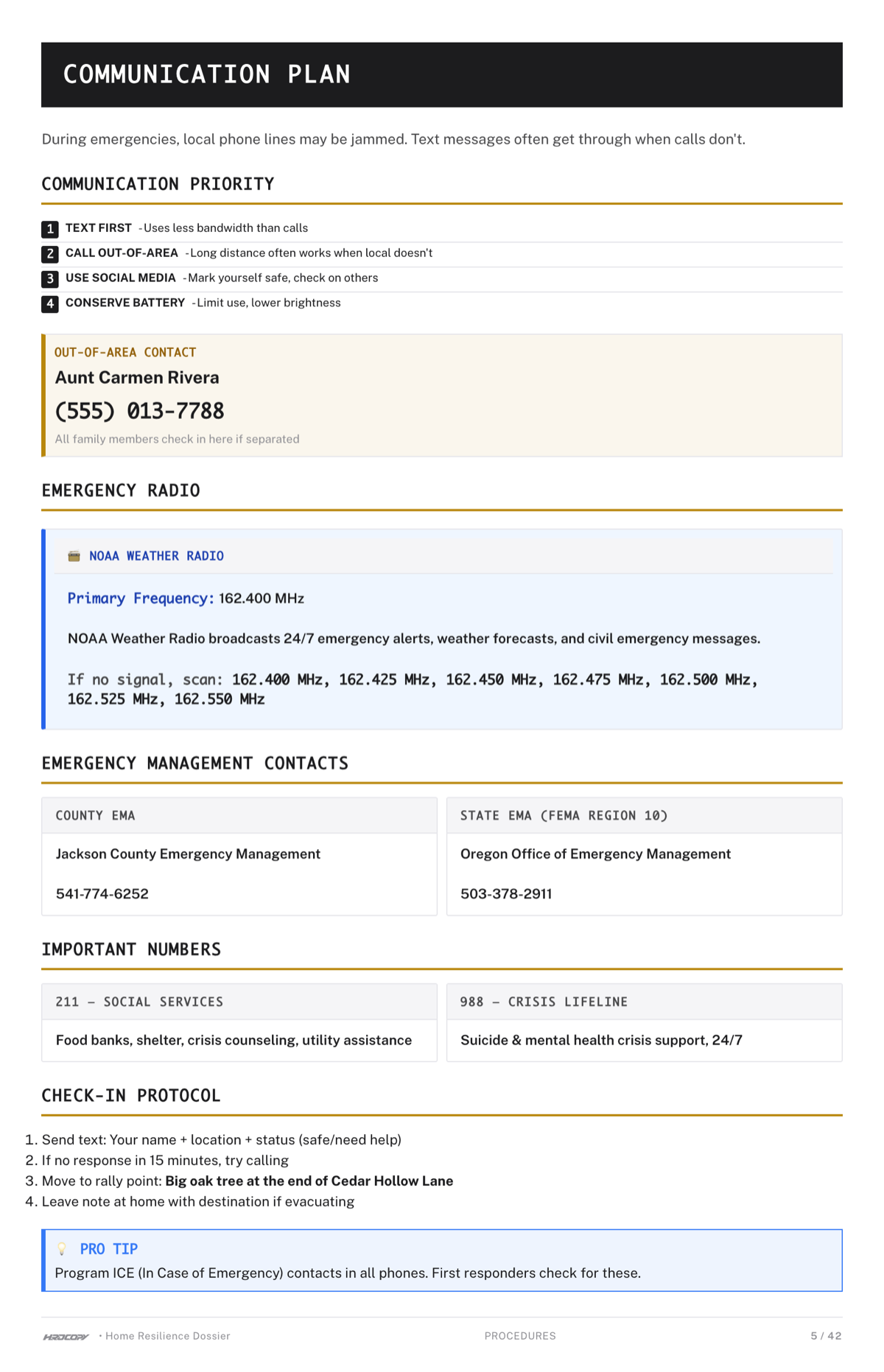
4. Have a family communication plan. If cell networks are jammed or down, how does your family reach each other? Pick a rally point. Designate an out-of-area contact. Make sure everyone knows the plan without needing to look at a phone. Start here.
5. Store some water and check your supplies. One gallon per person per day, three-day minimum. Check your medications -- do you have at least a week's supply? Check your flashlight batteries. Make sure you have a manual can opener. This isn't about building a bunker. It's about not being caught flat-footed by a disruption that lasts 48-72 hours. Here's a full sprint you can do in one weekend.
Where to Start
If reading this made you realize your household has some gaps, good. That's the point. Awareness without action is just anxiety. Awareness with action is preparation.
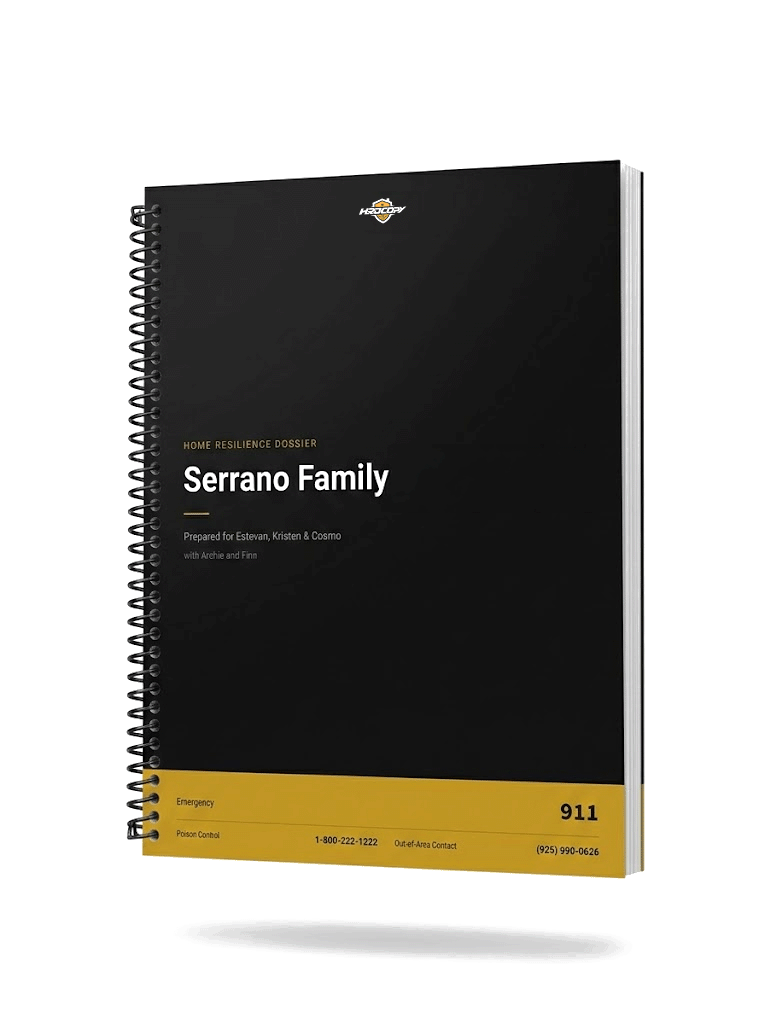
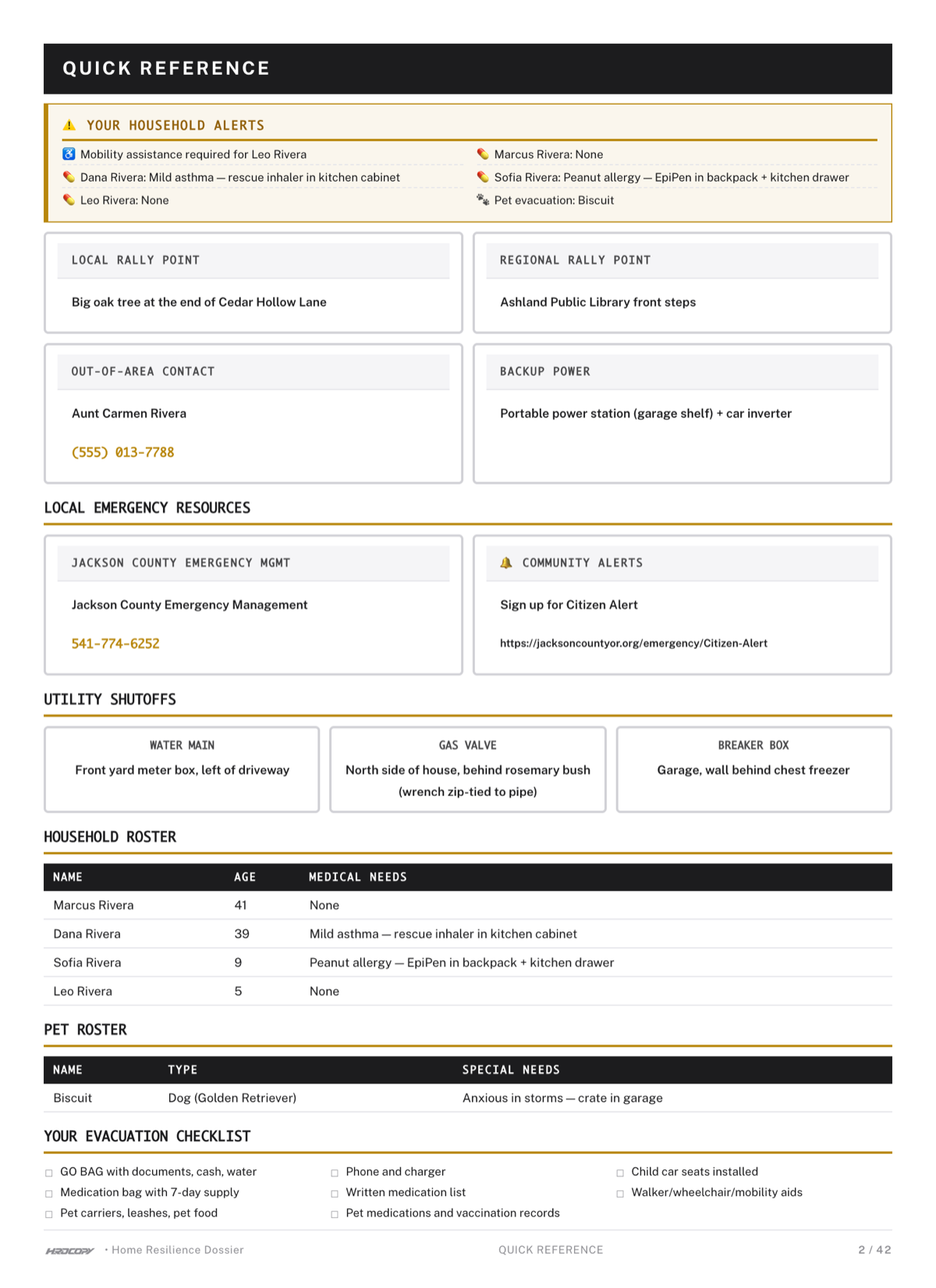
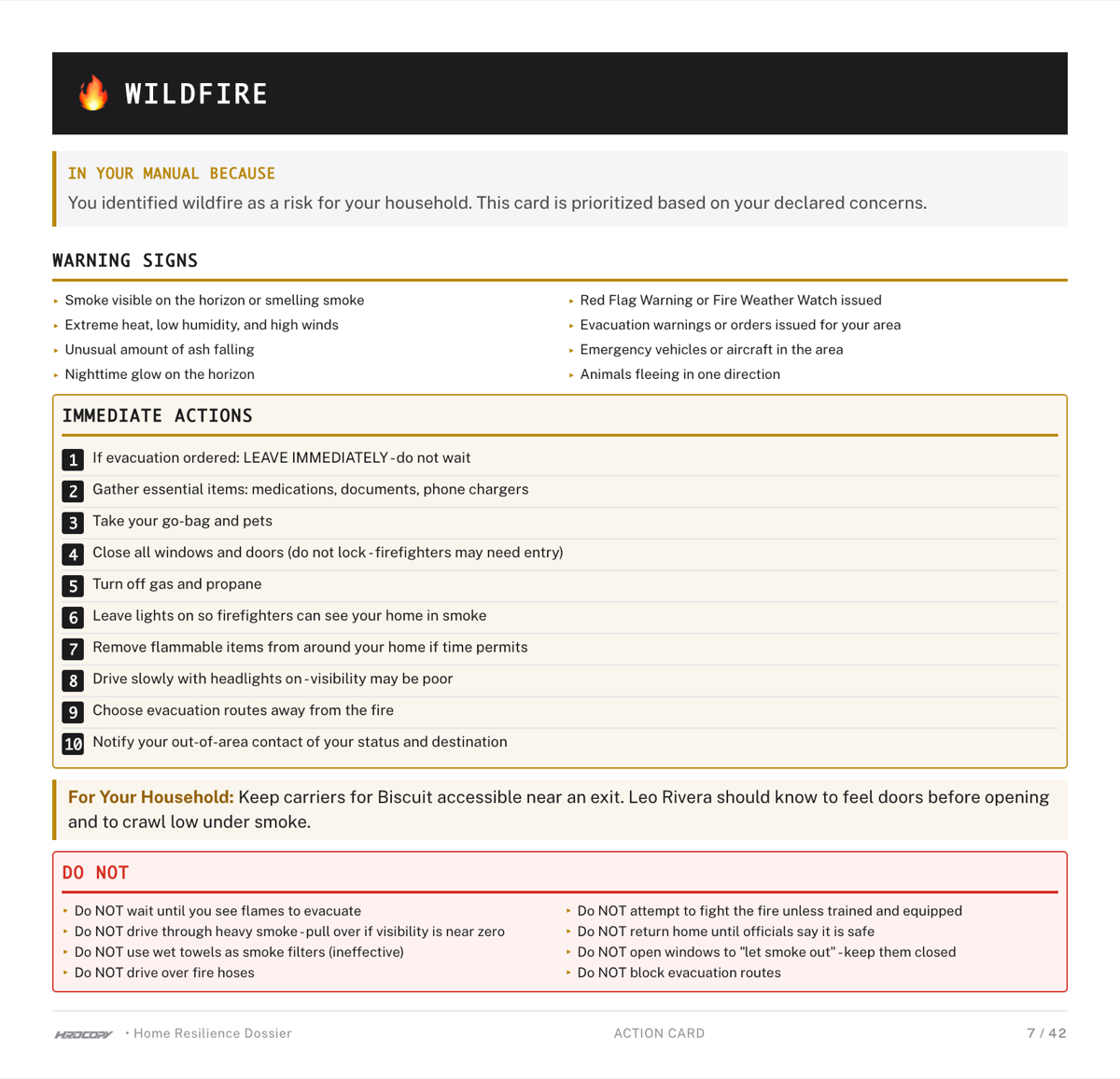
You can do everything on that five-step list yourself. Most of it takes an afternoon. If you want help organizing all of your household's critical information into a single physical document that works when the power is out and the internet is down, that's what hrdcopy.com builds. A printed, bound emergency manual for your household.
Either way: do the five things. This week. Your family will be better for it.